
A power seamer runs along a mechanical-lock standing seam and folds it closed, much faster and more evenly than hand seaming. Our catalog carries the ESE K9 double lock power seamer (see all ESE machines).
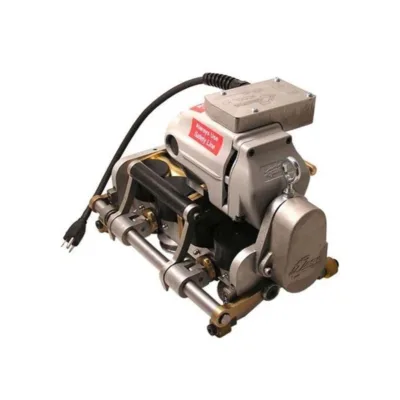
What a power seamer does
Mechanical-lock panels are not finished when they are set. The seam has to be folded closed. A single lock folds the seam once to 90 degrees. A double lock folds it a second time to 180 degrees. You start each seam at the ends with hand tools, then the power seamer drives itself along the rest.
When you need a double lock
Double-lock seams hold up better on low slopes and in snow country, where water can sit against the seam. The panel maker’s installation guide sets the minimum slope for each lock type. Follow it rather than a rule of thumb.
Matching the seamer to the panel
Seamers are built for specific seam profiles and heights. A seamer that doesn’t match the panel can damage the seam or leave it open. Before you buy, tell us the panel profile, the seam height and the machine that formed it.
Tips on the roof
- Hand-seam the first few inches at each end so the seamer starts cleanly.
- Check that each panel is fully engaged before you seam.
- Keep the cord or hose clear of the panels to protect the paint.
- Run a short test seam on a scrap panel when you start a new profile.
Questions
Does the ESE K9 fit any standing seam panel?
No seamer fits every panel. Send us the profile and seam height and we’ll check it against the K9.
Do I still need hand tools?
Yes. Use WUKO seaming pliers or Malco hand seamers to start seams and finish the ends.
Can a power seamer close snap-lock panels?
Snap-lock panels lock when you press them together and don’t need seaming. A power seamer is for mechanical-lock panels.
Can I see the seamer before buying?
Call ahead and ask whether one is at the warehouse.
See the panel types on our standing seam profiles page, and the roll formers that make them.